
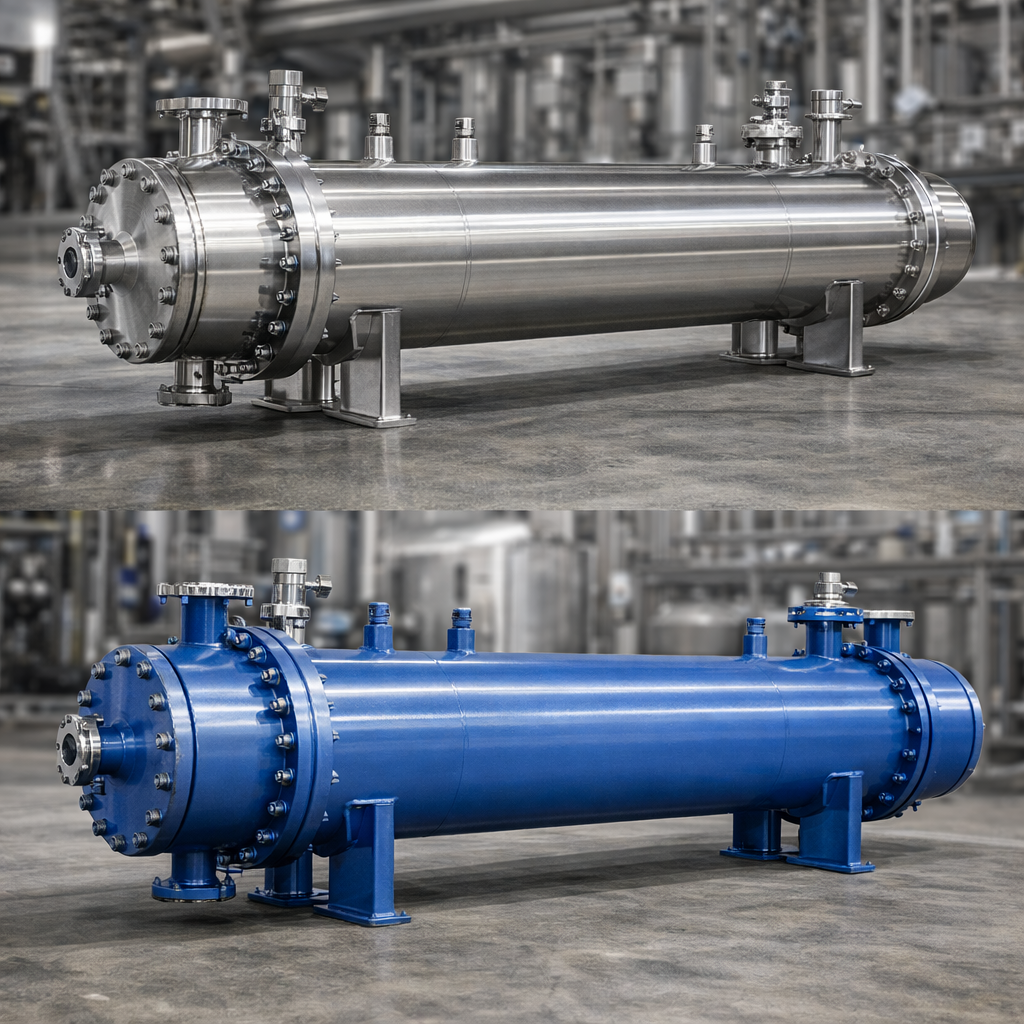
Heat Exchangers
Heat Exchangers are devices designed to transfer heat between two fluids either liquids, vapours, or gases without mixing them. They play a crucial role in heating, cooling, condensation, evaporation, and energy recovery processes.
The most common industrial type is the Shell & Tube Heat Exchanger, available in Mild Steel (MS) for general industrial use and Stainless Steel (SS304/316/316L) for corrosive or sanitary applications.
Heat Exchangers — Specifications
| Type | Shell & Tube Design (Fixed Tube Sheet / Floating Head / U Tube) |
| Material of Construction (Shell) | MS IS 2062 / SS304 / SS316 |
| Material of Tubes | SS304/316/316L, Copper, Cu-Ni, Titanium (as required) |
| Tube Diameter | 12.7 mm, 16 mm, or as per design |
| Tube Thickness (BWG) | 14–20 BWG depending on duty |
| Tube Layout | Triangular / Square Pitch |
| Design Pressure | 3–10 kg/cm² (higher available on request) |
| Design Temperature | -20°C to 300°C (depending on material) |
| Shell Side Fluid | Hot or cold fluid (as per application) |
| Tube Side Fluid | Hot or cold fluid (as per requirement) |
| End Connections | Flanged / Threaded / Nozzle Type |
| Shell Material | MS IS 2062 |
| Tube Material | MS / CS / Copper / SS (optional) |
| Finish | External Red Oxide Primer + Enamel/PU Paint |
| Corrosion Protection | Epoxy Lining (optional for corrosive service) |
| Shell Material | SS304 / SS316 |
| Tube Material | SS304 / SS316 / SS316L |
| Surface Finish | Internal & External Buffed Finish |
| Sanitary Design | Tri-clamp/TC Connections (Pharma/Food) |
Industry Applications
Where Heat Exchangers is commonly used
More in Process Equipment
Explore other products in this category
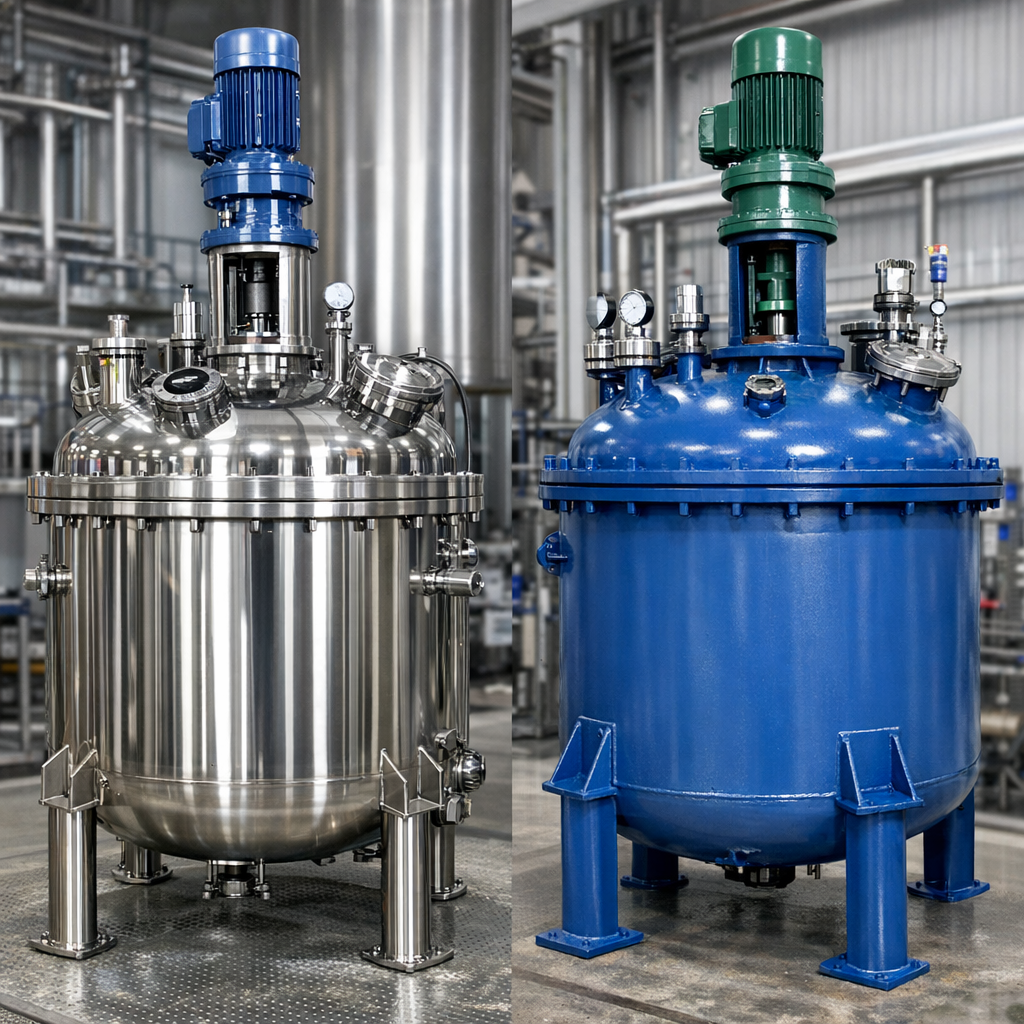
Reactors (MS/SS)
MS (Mild Steel) Reactors MS reactors are process vessels manufactured from mild steel, used where corrosion is low and cost-effective equipment is required. They are strong, durable, and suitable for general chemical processing, mixing, heating, and cooling operations. Often used with internal/external coatings (e.g., rubber-lined, epoxy-lined) when handling corrosive chemicals. SS (Stainless Steel) Reactors SS reactors are made from corrosion-resistant stainless steel grades (SS304, SS316/316L). They are widely used in pharmaceuticals, foods, cosmetics, biochemical and high-purity applications. They can withstand aggressive chemicals, high temperatures, and allow sanitary operations.
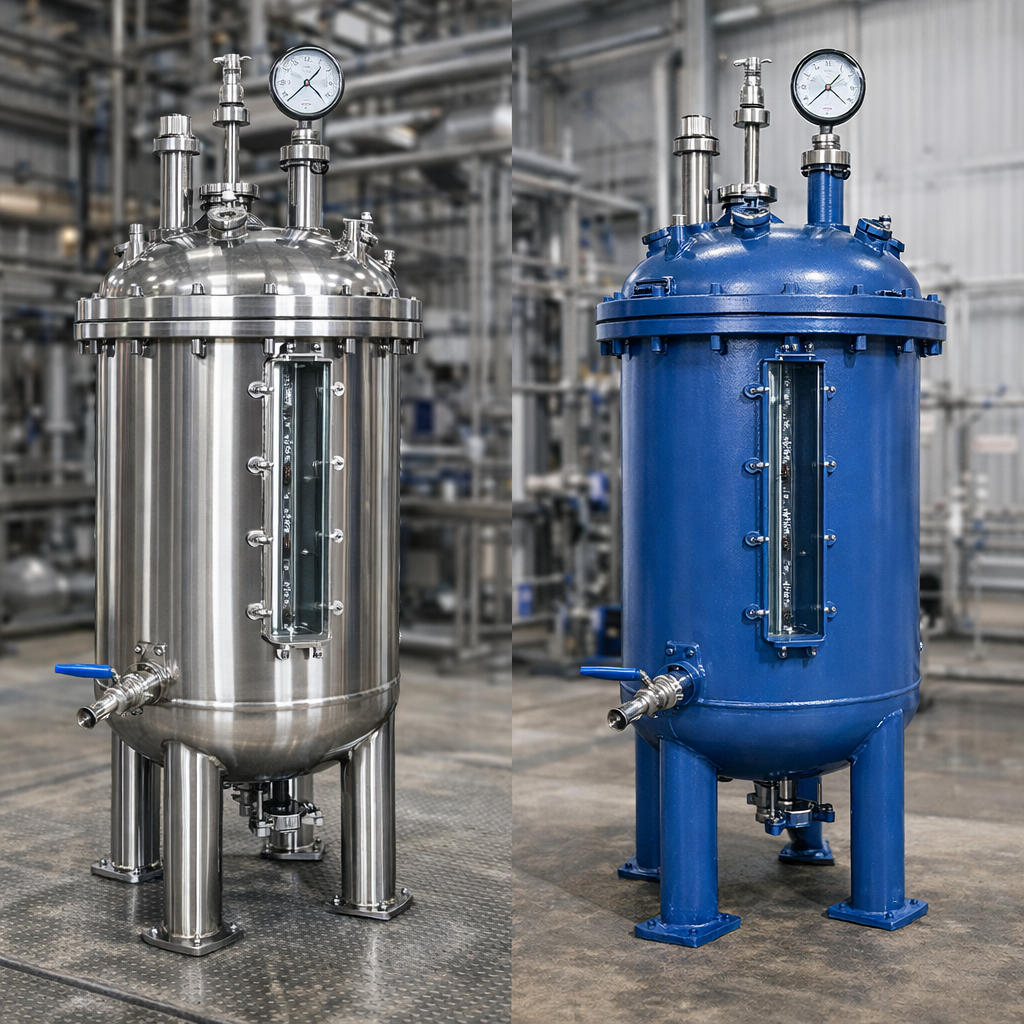
Receivers
Receivers are storage or collection vessels used for holding, transferring, or temporarily storing liquids, solvents, vapors, or process fluids. They are installed downstream or upstream of reactors, centrifuges, dryers, filters, distillation columns, and vacuum systems.These vessels may be atmospheric or pressurized, and are available in MS, SS304, SS316, or other material grades depending on chemical compatibility. Functions of Receivers: Collect liquid or condensate from a process Act as buffer/storage tanks Maintain steady flow to pumps or downstream equipment Handle vacuum or pressure conditions Collect product during batch or continuous processing
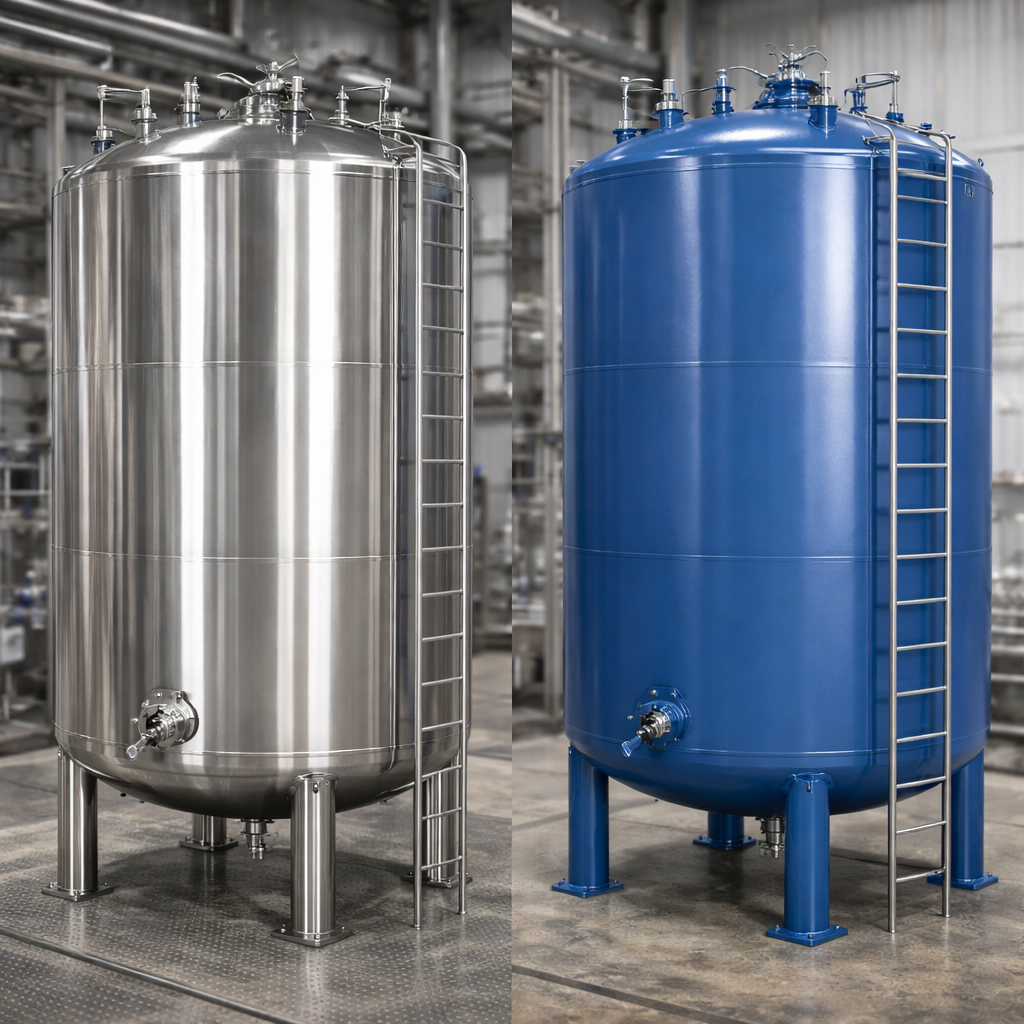
Storage Tanks
Storage Tanks are vessels used for holding raw materials, intermediates, finished products, solvents, water, oils, or chemicals. They are designed for atmospheric or pressurized operation depending on process needs. Available in Mild Steel (MS) or Stainless Steel (SS304/316/316L), these tanks can be vertical, horizontal, flat/ conical bottom, and with or without insulation and heating systems.
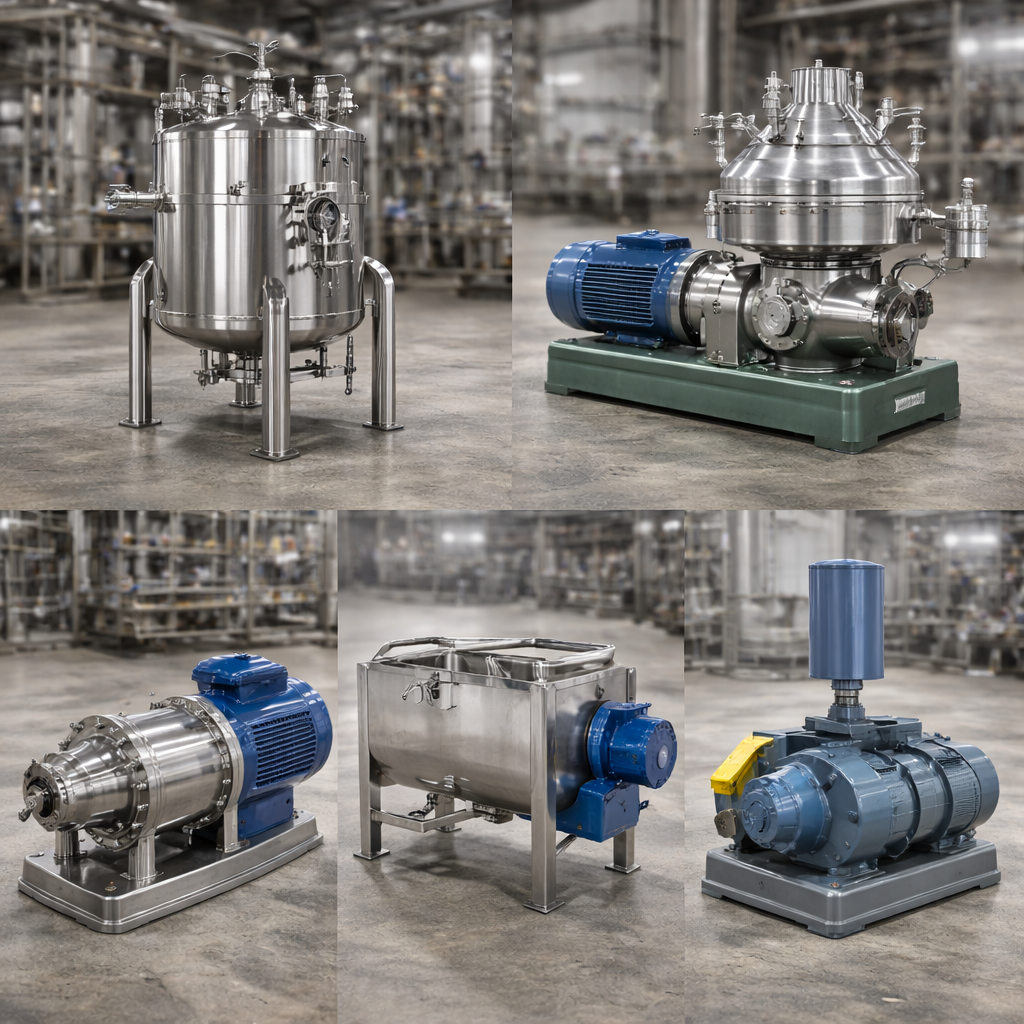
Static Equipment
Static equipment are fixed process units that perform functions such as storage, heating, cooling, phase separation, pressure containment, and fluid handling without any rotating components. These include vessels, tanks, heat exchangers, columns, and structural process equipment. They are designed according to ASME/IS/API standards depending on service requirements.